Outlook on the container sector in 2026
What shall we expect based on fundamental factors?
(published on Substack on 24 Feb 2026)
In today’s post, we shall discuss the container sector of the shipping industry and its outlook for 2026.
The subject sector of the shipping industry is very cyclical, and it has its booms and busts:
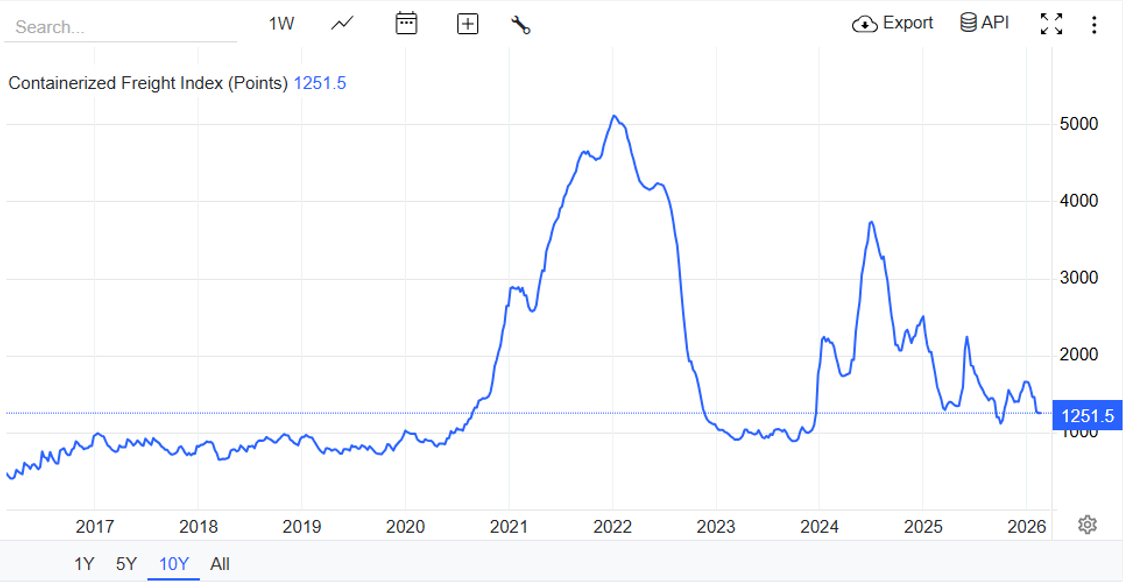
Source: https://tradingeconomics.com/commodity/containerized-freight-index
As you can see, the years 2021, 2022 and 2023 were stellar for the container and liner companies of the sector. While 2024 and 2025 were good, the upcoming years might not be as profitable as the previous 5 years.
Before diving into the fundamental factors affecting the mentioned sector, I would like to mention that the container and liner companies load, transport, and discharge containers between the port of loading and the port of discharge.
The most popular route is between China/East Asia (port of loading) and Northern Europe:
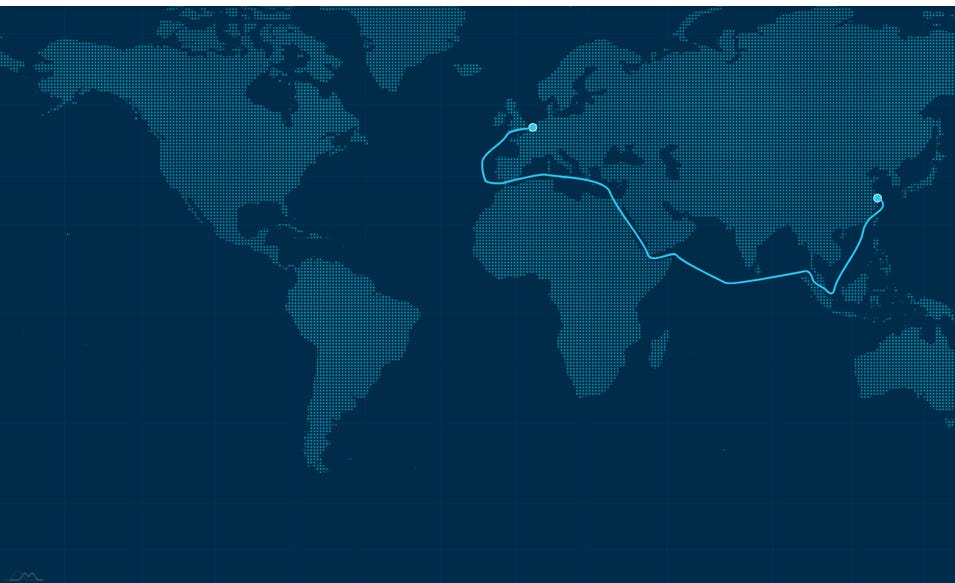
Source: Baltic Exchange
But in general, the map of global container routes looks like this:
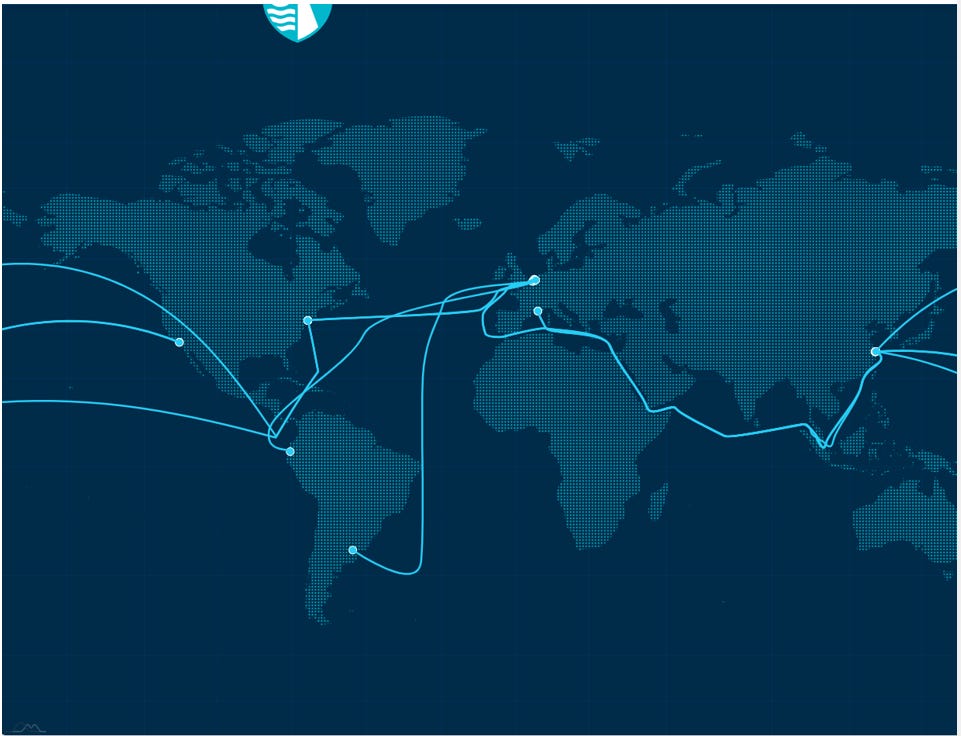
Source: Baltic Exchange
The containerization and container transportation played a huge role in globalisation. According to the Container Trades Statistics, the global container volume made up 192.9m TEU in 2025 (source: Container Trades Statistics), and in 2024, the volume was 184.3m TEU (https://indiashippingnews.com/record-breaking-year-for-global-container-volumes-in-2025/?utm_source=chatgpt.com).
According to Maersk, the global container volume in 2026 is slated to grow 2-4 per cent compared to 2025 (Maersk, 4Q and FY 2025 Investor Presentation).
Despite the increased volumes and the strong 2025 year for container and liner companies, as you can see above, the container rates softened. One of the reasons is overcapacity from new vessel deliveries. Namely, total container ship capacity increased by approximately 7.1 per cent in 2025 (source: https://www.worldports.org/global-container-ship-capacity-to-grow-7-1-in-2025/), and, as per my analysis, this trend is slated to continue in 2026 and in 2027 too. In other words, despite the projected growth in transported TEU volumes, the supply of new vessels will be higher, and the global container volume growth rate won’t be able to absorb the growth of container ship deliveries. That should lead to softening of the rates of container indices.
Another potential factor that will contribute to softening of the rates is the return of the Suez Canal, which was disrupted by the Houthis’ attacks on commercial vessels since 2023. According to analysts, the Red Sea return already affected the Drewry World Container Index, which declined on 15 Jan 2026 from USD 2,445 per 40 ft to USD 2,107 per 40 ft (on 29 Jan 2026), after Maersk and CMA CGM tested the route by transiting both the Suez Canal and the Red Sea:
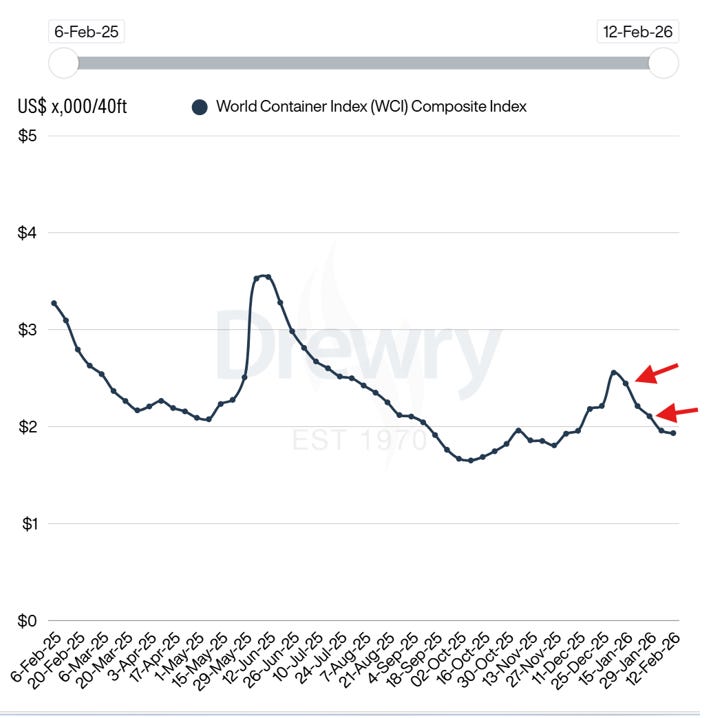
As you can see from the above chart, the decline of rates continued further in February 2026 (at the time of writing). Notably, the Suez Canal and Red Sea factors are crucial ones as the sailing time between the ports of loading and discharge shortens, compared to the previous 2 years, when container and liner vessels had to go via the Cape of Good Hope (yellow line on the map):
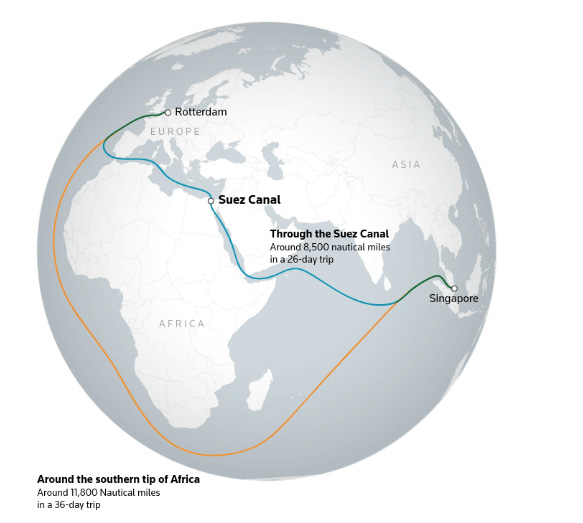
Source: LSEG
Taking into account the above-mentioned fundamental factors (overcapacity of the global container fleet and the potential return of the Suez Canal), we can conclude that in 2026 (and maybe even in 2027), the rates for container transportation should soften in comparison to the previous 5 years. Although we cannot predict to what levels the indices could decline in 2026, based on my fundamental research, the rates will soften within this year, potentially affecting the profitability of the container and liner companies’ core businesses.
Further risks
As with any other segment of the commodity industry, the container segment is dependent on the demand for transportation. The demand can be negatively affected by tariff wars, recession or any other factor that can undermine the outlook, especially geopolitical.
This all being said, we will continuously monitor the unfolding of 2026 for the container and liner companies.
If you have any questions, please contact me or leave comments, and I shall do my best to shed light on the matter.
Thank you for reading,
Value Investor in Shipping
Disclaimer: It is not financial advice but a research-based fundamental analysis.
Substack link: https://valueinvestinginshipping@substack.com