
Value investing and compounding interest

(published on Substack on 14 Apr 2026)
Dear fellow value investors,
Today, a small post where we discuss Albert Einstein’s eighth wonder of the world, compounding interest. It is arguably the most essential principle of value investing, along with the circle of competence, margin of safety (MoS) and low-risk/high-reward principles. This post will focus solely on the compounding of invested capital and how compounding, in general, can create magic.
It is worth noting that our capital creates interest not only on the capital we initially invested, but also on the interest added over time.
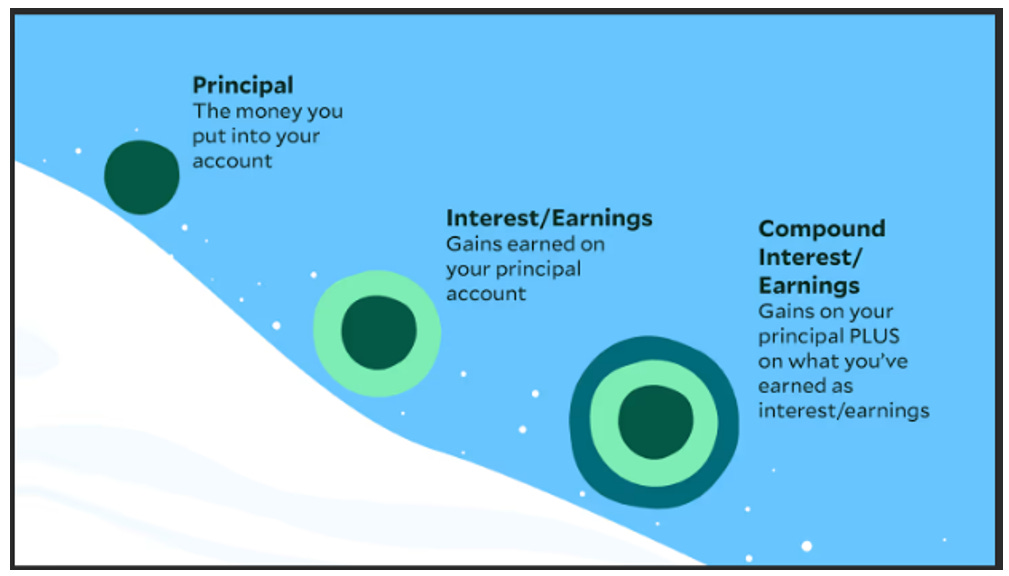
Source: American Century Investments
As illustrated above, the snowball effect is the clearest way to showcase compounding. On the way down the hill, the snowflakes and snow that are stuck to the rolling snowball (our capital) create our dividends and capital gains. Therefore, compound interest, if not disrupted, becomes a very powerful force.
Now, as value investors, we shall bear in mind the great rules of Mr Warren Buffett (1):
“Rule No. 1: Never lose money. Rule No. 2: Never forget rule No. 1”
So how do the above-mentioned rules intersect with the compounding? Our goal as value investors is to eliminate high risk as much as possible and avoid permanent loss of capital. Below, we will discuss how permanent loss of capital can sneak in just by the passing of time.
However, please bear in mind that even the greatest investors, such as Warren Buffett, Mohnish Pabrai, etc., invested in companies that went bankrupt. For example, Warren Buffett invested in 1993 in the company called Dexter Shoe Co. around USD 433 million, which he recalled as one of the worst deals in his life (3). Another example is related to Mohnish Pabrai, who invested in Horsehead Holding Corp. in 2013, which by 2016 filed Chapter 11 (4) bankruptcy. Charlie Munger invested in Alibaba in 2021, and the stock plummeted, leading to a large decline in Mr Munger’s position (5).
First of all, a way to reduce risk is not to overpay for a business. Namely, the price we pay, versus the value we get. If the price is above the intrinsic value (in our case, NAV = Net Asset Value), it does not make sense to buy it, as our future annual return will be lower.
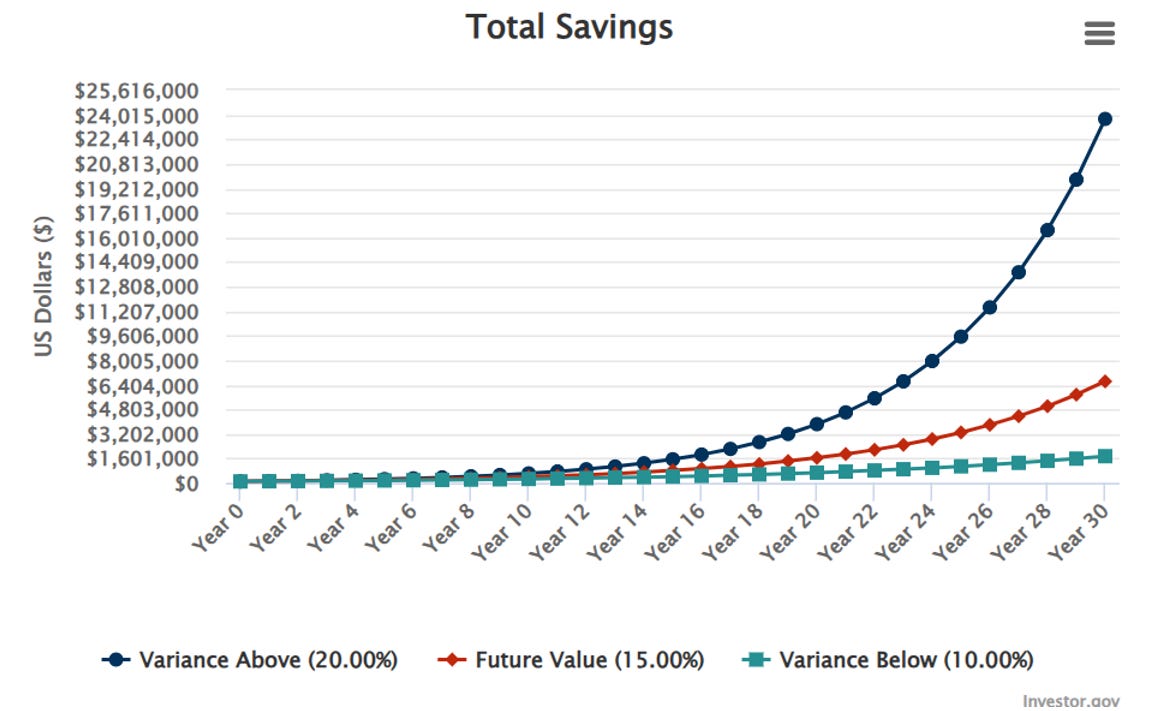
Lower returns, over time, might look like the example shown below (2):
Source: Investor.gov
The chart above shows the following assumptions:
· Initial capital of USD 100,000 (our case)
· Annualised returns are shown in three scenarios in percentage terms and final amounts:
a) 20 per cent – USD 23,737,631.38
b) 15 per cent – USD 6,621,177.20
c) 10 per cent – USD 1,744,940.23
As you can see from the example above, even a 5 per cent annual reduction in compound interest can make a huge difference to the final amount. The difference between a) and b) scenarios is around USD 17 million, and between the scenarios b) and c) is around USD 4.8 million. As you can see, it can cost us, as value investors, a lot of money if we do not protect capital and compound interest.
The chart below shows how we as investors could lose our edge compared to the S&P 500:
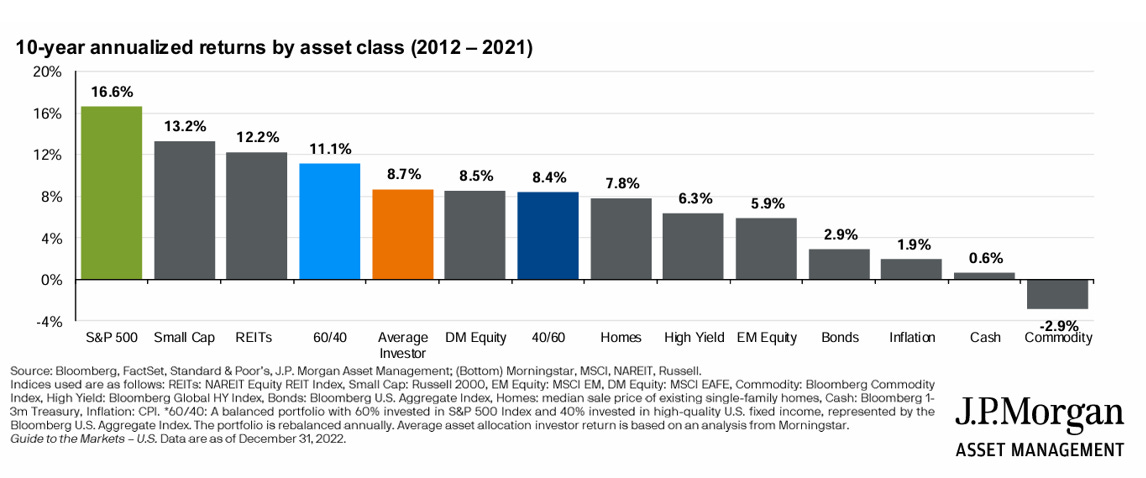
Source: JP Morgan, Guide to the Markets 1Q2023
I would like our mission to be striving for better annual returns than the S&P 500 by finding the undervalued good shipping and cyclical companies and making our sound investment based on fundamental analysis. Then we shall let the paint dry and let the compound interest do the heavy lifting.
Our recently established model portfolio with USD 100,000 will help us to showcase those returns and compound our invested capital.
If you have any questions, don’t hesitate to get in touch with me or leave comments, and I shall do my best to shed light on the matter.
Thank you for reading,
Value Investor in Shipping
Disclaimer: It is not financial advice but a research-based fundamental analysis.
Substack link: https://valueinvestinginshipping@substack.com
Sources:
1 https://www.ruleoneinvesting.com/blog/how-to-invest/warren-buffett-quotes-on-investing-success/
2 https://www.investor.gov/financial-tools-calculators/calculators/compound-interest-calculator
3 https://www.cnbc.com/2017/12/15/warren-buffetts-failures-15-investing-mistakes-he-regrets.html
4 https://www.bankruptcyobserver.com/bankruptcy-case/HORSEHEAD-HOLDING?utm
5 https://finance.yahoo.com/news/charlie-munger-called-alibaba-one-230116375.html